
Emotional neglect in marriage happens when one partner does not notice or respond to the other’s feelings. It is not always about fights or cruel words. Often, it is the quiet lack of care, comfort, and support. This emotional disconnection in marriage can make one or both partners feel lonely, even when they live under the same roof.
What makes emotional neglect so harmful is that it is hard to see. Unlike arguments or abuse, it leaves no clear signs. Instead, it shows up as distance, silence, or a feeling that your spouse does not really know you. An emotionally neglectful spouse may not mean to hurt you, but the effect can still be painful and damaging over time.
I have seen this in people close to me. A friend once said she thought her husband was just busy and not very talkative. Years later, she realized she had not felt truly heard or valued in a long time. That quiet emptiness had slowly chipped away at her happiness. This is why it is so important to notice emotional neglect early and take steps to address it.

What is Emotional Neglect in Marriage?
Emotional neglect in marriage happens when one partner does not give enough care or attention to the other’s feelings. It is not about forgetting once in a while—it is a pattern that leaves a person feeling unseen and unloved. This lack of emotional support in marriage can make life feel lonely, even when two people share the same home. Some experts call this emotional abandonment in marriage because the partner feels left out on an emotional level.
Neglect is not the same as abuse. Abuse is active—it shows up as yelling, blaming, or hurting someone. Neglect is quiet. It is when a spouse does not listen, avoids deep talks, or ignores your need for comfort. A marriage without big fights can still feel painful if there is no real emotional connection.
The hard part is that emotional neglect is easy to miss. Many couples think they are fine because they take care of bills, work, or kids. But the bond between them grows weak without emotional closeness. I remember a woman saying, “My husband is a good provider, but I feel like I live alone.” That is how signs of emotional neglect often show up—quiet, hidden, but very powerful.
Common Signs of Emotional Neglect in a Relationship
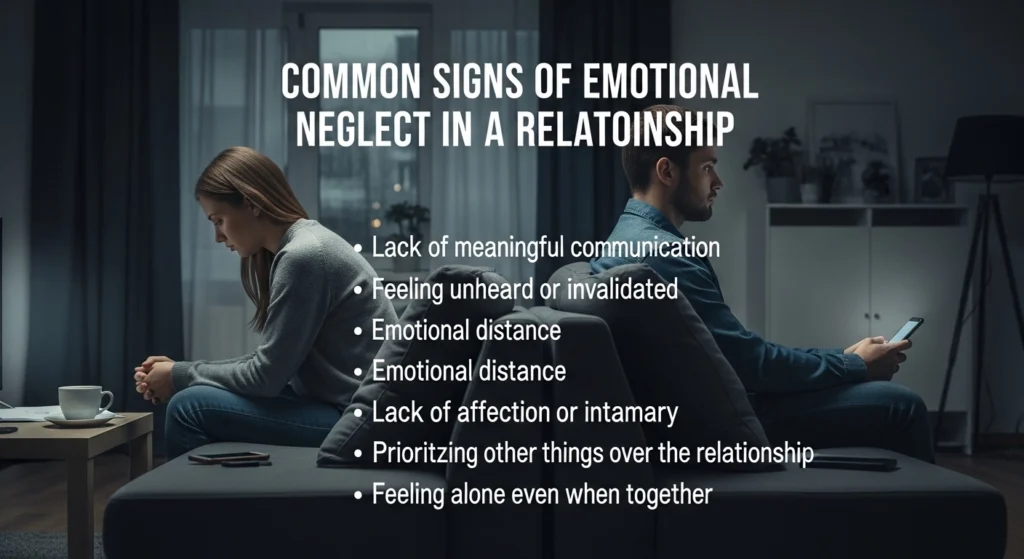
Emotional Distance and Disconnection
One of the clearest signs of emotional neglect in marriage is when you feel distant from your partner. Conversations may become short or surface-level, with little sharing of feelings. I’ve seen couples sit together in silence, not because they are comfortable, but because they don’t know how to connect anymore. This distance can leave you feeling more like roommates than life partners.
Lack of Empathy and Validation
A healthy marriage needs empathy—feeling understood and cared for. If your partner brushes off your worries or says you are “too sensitive,” it shows a lack of validation. I remember a time when I shared something important, but my partner’s cold response made me feel invisible. Without empathy, one person feels small while the other seems emotionally unavailable.
Indifference or Apathy in Daily Life
Neglect often shows up as indifference in small, everyday moments. For example, if your partner doesn’t ask about your day or ignores your struggles, it signals emotional abandonment in marriage. These little things build up over time, creating loneliness. When a partner seems not to care about your feelings, it hurts more than arguments.
Decline in Physical Intimacy
Physical closeness is more than intimacy—it’s a way of showing care. When touch, hugs, or simple gestures disappear, it often points to emotional disconnection. A lack of intimacy in marriage can make one feel rejected or unwanted. Over time, this gap grows and weakens both trust and closeness.
Lack of Appreciation and Gratitude
Everyone wants to feel valued. If your efforts at home or in the relationship are ignored, it can feel discouraging. I’ve talked with people who said, “I do everything, but it goes unnoticed.” Without appreciation or gratitude, the bond begins to feel one-sided and draining.
Emotional Unavailability
An emotionally unavailable partner often seems “closed off.” They may avoid deep talks, keep feelings bottled up, or shut down during conflict. This leaves the other partner carrying the emotional weight of the relationship. When one person feels emotionally unsupported, marriage begins to feel lonely even when you are together.
Causes of Emotional Neglect in Marriage
Childhood Emotional Neglect (CEN) Carryover
When someone grows up in a home where feelings were ignored, they may carry this into marriage. If parents never showed love or talked about emotions, the child learns to hide their own. As an adult, this can turn into being an emotionally unavailable spouse. I once spoke with a man who said, “I never learned how to talk about feelings because no one did at home.” This kind of emotional blind spot can hurt a marriage without either partner noticing at first.
Stress and Busy Lifestyles
Life today is fast and full of pressure. Jobs, kids, and money worries can leave little time for emotional connection. I remember a point in my own life where I was so busy with work that my partner felt pushed aside. I wasn’t trying to neglect them, but stress made me less present. When stress takes over, even a loving marriage can start to feel distant.
Unresolved Trauma or Attachment Issues
Past hurts or trauma can make it hard to open up in a marriage. A partner who has been hurt before may build walls to feel safe. They may want closeness but also fear it, which creates distance. I’ve seen how this struggle can make one partner reach out for connection while the other pulls back. Over time, this cycle can feel like emotional abandonment in marriage.
Cultural and Gender Expectations
Culture also plays a big role. In some families, men are told not to cry or share feelings, while women are expected to carry the emotional weight. This can create an unfair balance in marriage. A husband may think staying silent means being strong, while his wife may feel she has to handle everything alone. I’ve talked with couples who said, “We live together, but I feel alone,” because of these silent rules.
Effects of Emotional Neglect on Marriage and Mental Health
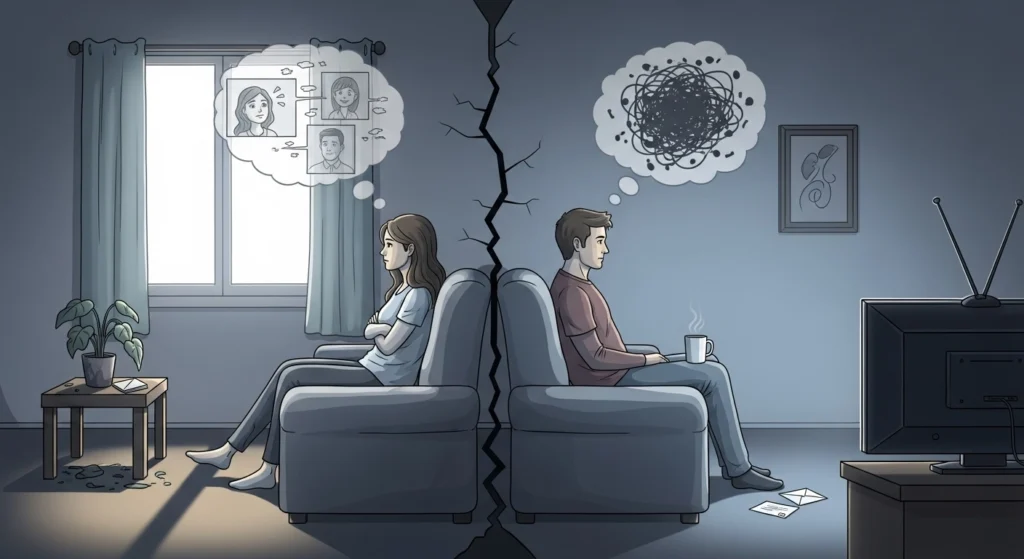
Loneliness and Isolation in Marriage
One of the biggest effects of emotional neglect in marriage is feeling lonely. You may live in the same house, eat at the same table, and share a bed, but still feel unseen. I once heard a woman say, “I feel more alone with my husband than when I’m by myself.” That kind of loneliness can be heavy and hurtful.
Low Self-Esteem and Poor Self-Image
When your feelings are ignored, you may start to believe they don’t matter. Over time, this lowers your confidence. I’ve seen friends who were once strong and sure of themselves begin to doubt everything. Without support, your self-image can slowly fade away.
Mood Swings, Anxiety, and Depression
Emotional neglect and depression often come together. When you feel unheard, it can cause mood swings, stress, or sadness that doesn’t go away. A friend once told me that silence in her marriage made her more anxious than arguments ever did. Neglect may be quiet, but it can harm your mental health deeply.
Erosion of Trust and Intimacy
Trust and closeness are the roots of a healthy marriage. When one partner feels ignored, that trust starts to weaken. Small things—like not listening, not sharing, or avoiding closeness—build up over time. I’ve seen couples lose intimacy even while living under the same roof.
Long-Term Relationship Damage
If neglect continues, it can slowly break the bond between partners. Some couples grow apart, stop trying, or even look for comfort outside the marriage. I’ve watched relationships where both people cared, but the emotional gap grew too wide. Once that gap is big, it becomes hard to heal.
Emotional Neglect vs Emotional Abuse: Key Differences
Emotional neglect and emotional abuse are not the same. Neglect is about absence—it happens when a partner does not notice or respond to feelings. It is the quiet kind of hurt, where someone feels invisible. Abuse is active harm—like yelling, blaming, or controlling. One is silent, the other is loud, but both cause pain.
Both neglect and abuse can damage a marriage. Neglect slowly creates distance and makes a person feel unwanted. Abuse creates fear, shame, and emotional wounds right away. I once heard a woman say, “When he shouted, at least I knew he saw me. When he stayed silent, I felt like I didn’t exist.” That shows how emotional absence in marriage can hurt as much as emotional cruelty.
Neglect is often hard to spot because it hides in daily life. From the outside, a couple may look fine, but inside, there is emptiness. Abuse is easier to see because it leaves clear signs. Still, both can lead to low self-worth, broken trust, and struggles in the relationship if not addressed.
How to Deal with Emotional Neglect in Marriage
Recognize and Acknowledge the Pattern
The first step is to see what’s really happening. Emotional neglect is not always obvious because it’s about what is missing—not what’s being done. If you often feel invisible, lonely, or like your feelings don’t matter, it may be a pattern of neglect. I once worked with a couple where the wife said, “I felt like a roommate, not a partner.” Realizing this truth was painful but it was also the start of change.
Open Communication with Your Partner
Once you notice the problem, share it with your partner in a calm way. Use “I” statements, like “I feel lonely when we don’t talk about our day.” This lowers defensiveness and opens the door for connection. Many people are not taught how to talk about feelings, so patience matters. Communication is not about blame—it’s about building understanding.
Rebuilding Emotional Intimacy Step by Step
Emotional closeness does not return overnight. It grows through small daily acts—listening, showing gratitude, or giving a hug. Even short check-ins like, “How are you feeling today?” can bring warmth back into the relationship. In my own marriage, I found that putting away the phone during dinner made a big difference. It showed presence and care.
Professional Help: Counseling and Therapy
Sometimes couples need outside support. Couples therapy for emotional neglect provides tools to rebuild trust and learn emotional skills. A therapist helps both partners see blind spots and practice new ways of connecting. For many couples, this is the turning point toward healing. Seeking help is not a weakness—it’s an investment in the marriage.
Self-Care and Personal Healing
While working on the relationship, you also need to take care of yourself. Healing from emotional neglect means building self-worth, setting boundaries, and finding support through friends, family, or journaling. Self-care is not selfish—it gives you the strength to face relationship struggles with clarity. Remember, fixing emotional neglect in relationships starts with both partners, but your personal healing is just as important.
Can a Marriage Survive Emotional Neglect?
Yes, a marriage can survive emotional neglect if both partners are ready to work on it. Neglect does not always mean the marriage is over—it means something important is missing. With effort, care, and time, couples can bring back the connection. I have seen partners who once felt like strangers slowly rebuild closeness and even grow stronger together.
The most important part is that both people try. If only one partner makes the effort, the change will not last. Couples need to set healthy boundaries, talk honestly, and show small acts of care every day. Sometimes, working with a counselor or therapist makes this process easier. Overcoming emotional neglect takes patience, but it can lead to real healing.
In my own life, I noticed that small changes made the biggest difference—like checking in about each other’s day, saying thank you, or making eye contact during conversations. Healing emotional neglect in marriage is not about one big step—it’s about many small steps done with love and commitment.
Preventing Emotional Neglect in Long-Term Relationships
A strong relationship needs emotional connection. This means noticing how your partner feels, not just what they say. Asking simple questions like, “How are you really doing?” can help your partner feel cared for. I learned that when I stopped guessing and started asking, our talks became much closer.
Doing regular emotional check-ins is also important. It doesn’t have to take a lot of time. Even a few minutes each day to talk without phones or TV can make a big difference. Some couples do this before bed or while sharing a meal. These small talks help both partners feel seen and heard.
It’s also key to show intimacy and appreciation. This can be holding hands, giving hugs, or saying thank you. Simple acts of kindness can build a safe and loving bond. In my own marriage, showing gratitude made my partner feel valued, and that brought us even closer.
FAQs (Frequently Asked Questions)
What is emotional neglect in marriage?
Emotional neglect in marriage happens when one or both partners fail to give enough care, love, or support. It’s not always loud or obvious, but over time, it can make the relationship feel cold and distant.
How do I know if I’m experiencing emotional neglect in marriage?
You may notice signs like feeling lonely even when your spouse is near, lack of deep talks, or no support during tough times. If you often feel invisible or unimportant, these are red flags.
Can emotional neglect in marriage be fixed?
Yes, it can be improved if both partners are willing. Honest communication, spending quality time, and sometimes seeking couples therapy can help rebuild connection and trust.
What’s the difference between emotional neglect and emotional abuse?
Emotional neglect is more about what’s missing—like love, support, or care. Emotional abuse is active harm, such as insults, manipulation, or control. Both can hurt deeply, but they are not the same.
When should I seek professional help for emotional neglect in marriage?
If the neglect has lasted a long time, caused sadness or anxiety, or led to distance you can’t fix alone, therapy is a smart step. A counselor can guide you both toward healing.
Final Thoughts
Emotional neglect can quietly harm a marriage if it is not noticed. This is why it is important to see the signs early. In my own life, I realized that naming the problem helped me face it. Once you understand what is happening, you can begin to make changes.
With time and effort, couples can rebuild their bond. Small acts of care, like listening or showing appreciation, add up. Some couples may also need help from a counselor, and that is okay. I have seen that even when things feel broken, healing is possible if both partners try.