
Divorce is a big decision that can change life in many ways. It doesn’t just affect a husband and wife, but also children, family, and friends. People get divorced for many reasons, like constant fighting, abuse, or simply growing apart. I’ve seen how scary it feels at first, but I’ve also seen how it can give people a fresh start.
Divorce has both good and bad sides. For some, it brings freedom, peace, or a chance to grow. For others, it brings money problems, stress, and challenges for kids. This is why asking, “Is divorce a good idea?” really depends on each person’s situation and how the process is handled.
In this article, we’ll take a clear and honest look at the pros and cons of divorce. You’ll learn how it can help in some cases but also cause difficulties in others. My goal is to give you useful information so you can think carefully about the impact of divorce and make the best choice for your life.
What Does Divorce Really Mean?
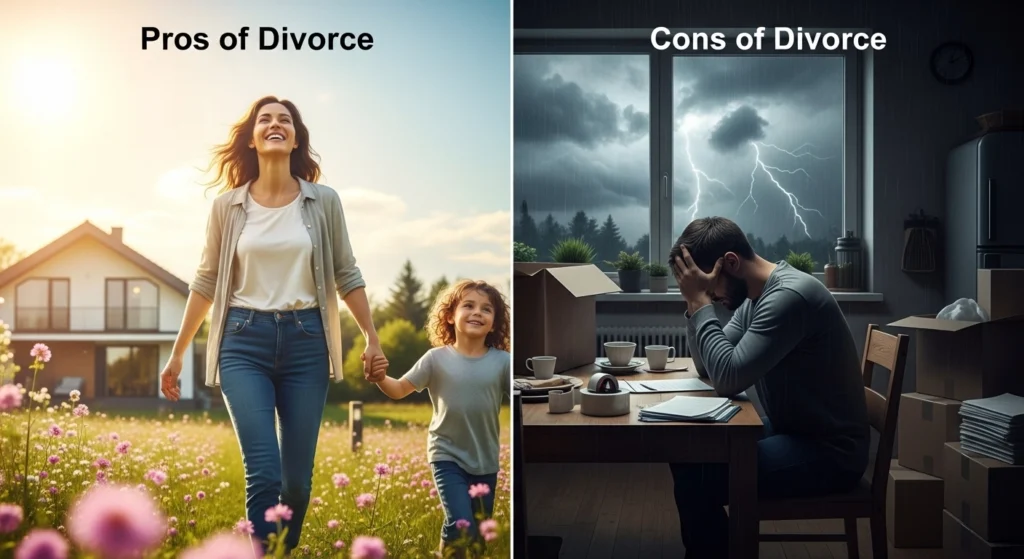
Divorce is when a court legally ends a marriage. This means the husband and wife are no longer married in the eyes of the law. During the process, things like money, property, and custody of children are decided. But divorce is not only about legal papers—it also brings strong emotions, like sadness, fear, or sometimes relief.
Divorce and separation are not the same. Separation means a couple lives apart but is still married. Some people separate to take a break, to see if things can improve, or because of financial reasons. Divorce is final. Once it is done, both people can live completely on their own and even remarry if they want.
People divorce for many reasons. Some grow apart or stop feeling close. Others deal with constant fighting, abuse, or money problems. I’ve known people who said their values or goals were too different to stay together. In most cases, divorce happens when the problems cannot be fixed, no matter how hard the couple tries.
Pros of Divorce
1. Freedom and Independence
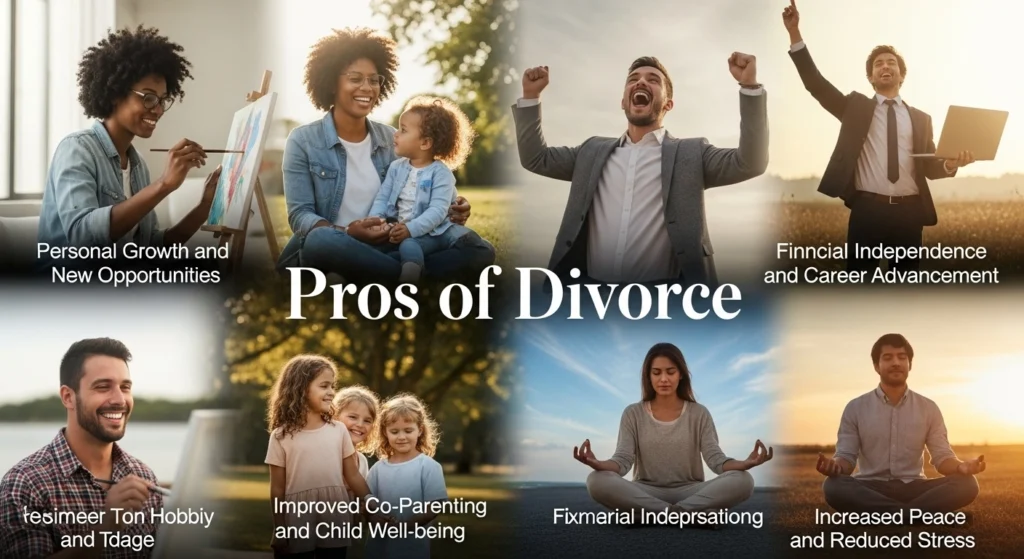
One of the biggest benefits of divorce is freedom. After divorce, you can make your own choices without worrying about constant conflict or compromise. Many people enjoy the independence to set their own schedule, spend money how they want, or even move to a new city. I’ve seen friends who felt stuck in their marriage finally feel lighter and more in control once they started living life on their own terms.
2. Personal Growth and Self-Discovery
Divorce can also open the door to personal growth. When a marriage ends, people often take time to think about who they are and what they want. This can be a chance to build confidence, set new goals, and try things they once put aside. Some people pick up hobbies, go back to school, or start new careers. I’ve noticed that the process, while hard, often helps people reinvent themselves in a stronger way.
3. Escape from Unhealthy or Toxic Relationships
For those in abusive, controlling, or loveless marriages, divorce can be a lifesaver. Leaving a toxic relationship often leads to better mental and physical health. Without constant stress or fear, people can finally feel safe and respected. A close friend once told me she didn’t realize how much her health was suffering until after she left her marriage—she slept better, smiled more, and even felt healthier.
4. Better Environment for Children in High-Conflict Homes
Children feel the stress when parents fight all the time. Divorce can sometimes give them a calmer, safer home. Instead of hearing yelling or seeing tension every day, they can enjoy more peace and stability. Research shows kids often do better when conflict ends, even if it means living in two separate homes. From what I’ve seen, children adjust better when both parents focus on creating a positive, low-stress environment.
5. Legal and Emotional Closure
Divorce gives a clear end to the marriage. This closure makes it easier for both people to move forward without confusion or “what if” feelings. Instead of living in the middle of conflict or separation, divorce provides a final decision. Many people find this closure helps them heal emotionally and rebuild their lives. It may not erase the pain, but it stops the cycle of uncertainty.
6. Opportunity to Remarry or Start Fresh
Divorce also gives the chance to start fresh. Some people use this time to meet new partners and build healthier relationships. Others focus on starting over by setting new standards for love and family. For example, I know someone who, after divorce, took time to grow personally and later found a partner who truly matched her values. Divorce can clear the path for new beginnings that bring real happiness.
Cons of Divorce
1. Financial Challenges
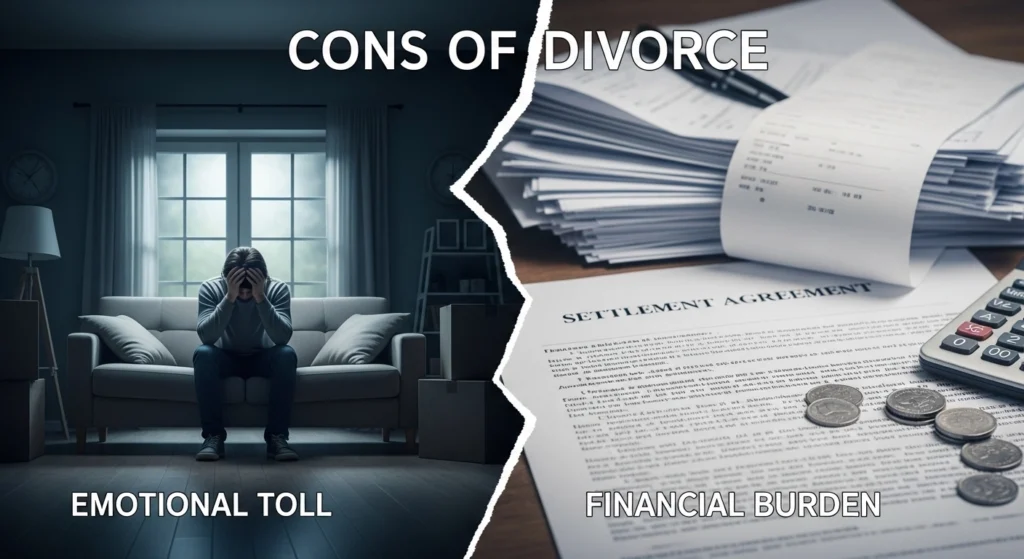
One of the hardest parts of divorce is money. Dividing property, paying alimony, and covering child support can feel overwhelming. Many people notice their lifestyle changes after divorce, with extra bills and less savings. When I worked with someone going through this, they told me how even small expenses started to feel heavy. It taught me that financial planning after divorce is not optional—it’s survival.
2. Emotional and Psychological Strain
Divorce doesn’t only end a marriage—it shakes emotions too. Feelings like guilt, sadness, anxiety, or even anger can stay for months or years. For some, it feels like grief, because you’re letting go of the life you once imagined. I remember speaking with a close friend who said the hardest part wasn’t signing papers, but the silence in the house afterward. Healing takes time, and therapy or support groups often help.
3. Impact on Children
Children often carry the heaviest burden of divorce. They may feel confused, blame themselves, or worry about losing a parent’s love. Some kids need counseling or extra attention to cope with these changes. I once volunteered with a program for children of divorced parents, and I saw how even small routines, like weekly family dinners, helped them feel safe again. Stability and open communication make a big difference.
4. Legal Complications
Divorce can drag on in courtrooms, especially when custody or property is disputed. The legal process is often slow, expensive, and emotionally draining. I have seen parents spend months fighting over custody agreements, only to realize their children were hurting in the middle. Having an experienced divorce lawyer helps, but the stress of legal battles should not be underestimated.
5. Social Stigma and Isolation
In many cultures, divorce still carries judgment. Friends, family, or community members may treat someone differently after divorce. This social pressure can create loneliness and make moving forward harder. A woman I once interviewed for a community project said she avoided family gatherings because she felt people whispered about her. That’s why finding supportive communities, whether online or in-person, becomes vital.
6. Strained Parent-Child Relationships
Divorce can change how parents connect with their children. Stress, financial struggles, or disagreements with the other parent may create distance. Some kids may even feel torn between parents. I’ve noticed this with families I’ve supported—children often just want peace and consistency. Parents who stay calm, communicate openly, and avoid involving kids in conflicts usually maintain stronger bonds.
Pros and Cons of Staying Married Instead of Divorcing
When Staying Married Might Be Better
- Shared financial stability and household resources.
- Children grow up in a two-parent home with daily support.
- Problems like poor communication may be fixed with counseling or therapy.
- Familiar routines and comfort of family life stay intact.
When Divorce Might Be Better
- Marriage involves abuse (emotional, physical, or financial).
- Constant conflict creates a stressful environment, especially for children.
- Love, trust, or respect is gone with no chance of rebuilding.
- Divorce allows space for healing, peace, and new beginnings.
Side-by-Side Comparison
| Staying Married | Divorcing |
| Financial stability (shared bills, assets) | Financial challenges but chance to rebuild independence |
| Children live with both parents daily | Children may adjust to split homes but avoid constant conflict |
| Counseling may repair communication issues | Abuse or toxic behavior ends, offering safety and peace |
| Familiar routines and family comfort remain | Opportunity for fresh start, self-growth, and healthier relationships |
Tips for Managing Divorce Positively
- Seek therapy or counseling – Talking with a professional helps you manage stress, sadness, or anger in healthy ways.
- Build a strong support network – Lean on family, trusted friends, or divorce support groups so you don’t feel alone.
- Focus on financial planning – Create a budget, track expenses, and meet with a financial advisor if needed to stay in control.
- Prioritize children’s well-being – Keep their routine steady, protect them from conflicts, and reassure them with love and attention.
- Take care of yourself – Eat well, exercise, and rest to stay emotionally and physically strong during the process.
- Stay positive about the future – Treat divorce as a chance to heal, grow, and build a healthier life moving forward.
FAQs (Frequently Asked Questions)
What is the biggest regret after divorce?
Many people regret not trying harder to fix problems before ending the marriage. Some wish they had gone to counseling or talked more honestly. A family member once told me she rushed into divorce and later felt she should have worked on communication first. Still, when abuse or constant fighting is involved, most people feel divorce was the right choice.
Who suffers more financially in divorce?
Both men and women face money challenges, but women often struggle more after divorce. This is because of lower income, child care costs, or career breaks. Men may also face financial stress from alimony or child support. I had a friend who divorced in her 30s, and the best step she took was meeting with a financial planner to feel secure again.
How does divorce affect children long term?
Kids may feel sad, worried, or even blame themselves. Over time, their well-being depends on how parents handle the divorce. If children grow up in a home full of fights, divorce can make life calmer. I’ve seen children do much better once their parents created peaceful, separate homes and still showed them love.
Is it better to divorce or stay unhappy?
It depends on the marriage. If the main problem is poor communication or stress, counseling can sometimes fix it. But if there is abuse, betrayal, or constant conflict, divorce may be the healthier choice. From what I’ve seen, people who stay in toxic marriages often feel trapped, while those who divorce in such cases usually find peace and freedom.
Conclusion
Divorce is a big decision that can change life in many ways. It has both good and bad sides. Some people find freedom, peace, and a chance to start fresh. Others face money problems, stress, or challenges with children. Every situation is different, so the choice should be made with care.
It’s also wise to get professional help. A counselor can guide you through emotions, while a divorce lawyer can explain your legal rights and options. Support from experts can make the process easier and help you protect your future.